

Field Notes
How to Read Weather Before It Turns Dangerous

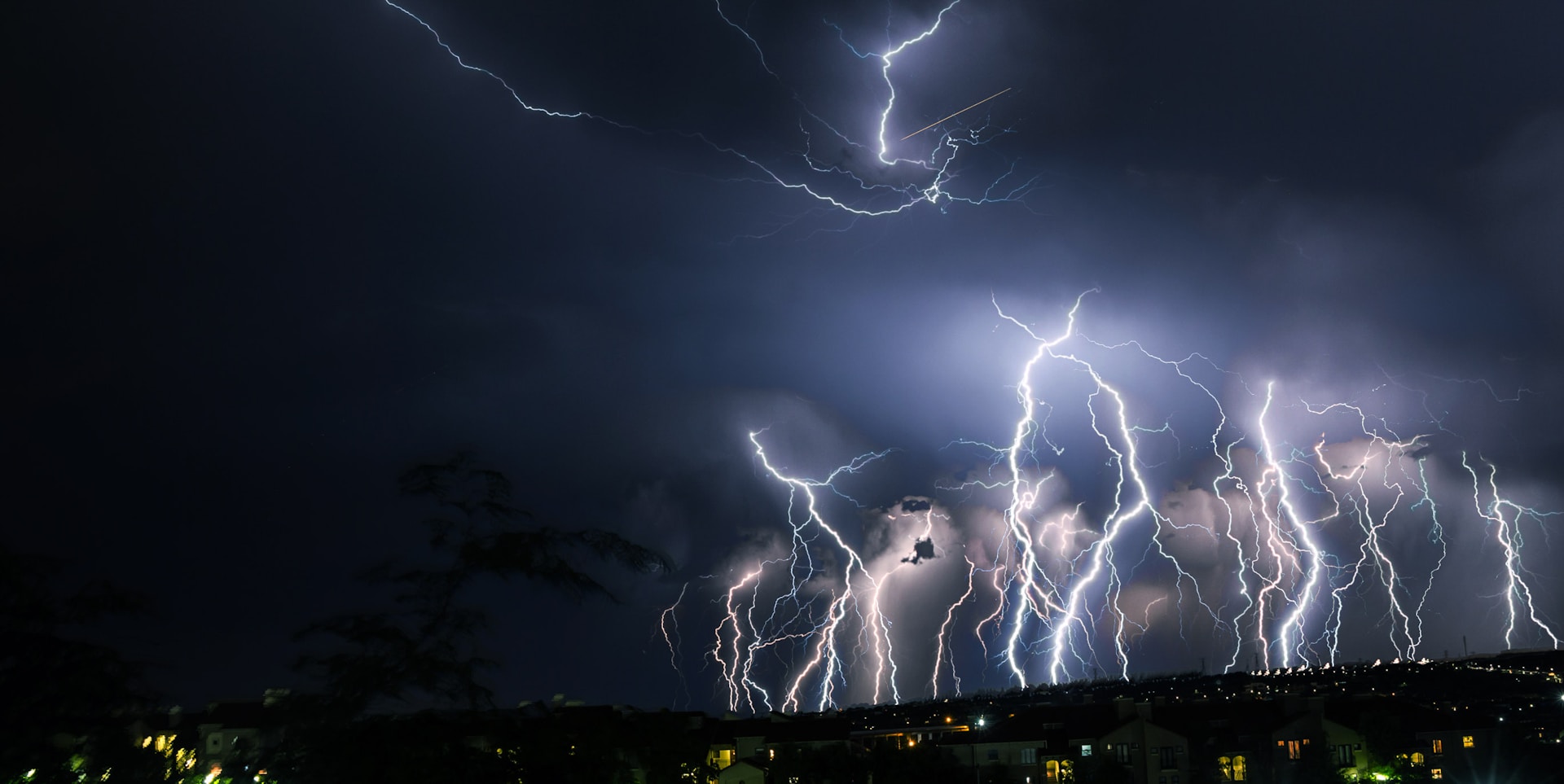
Nobody gets caught in a storm because they ignored a forecast. They get caught because they didn’t know what they were looking at.
Modern weather apps are genuinely useful — until you’re two hours into a ridge hike with no signal and the sky starts doing something you don’t recognize. At that point, the forecast is irrelevant. What matters is what’s in front of you, right now, and whether you know how to read it.
Here’s how.
Start With the Clouds
Clouds are the sky’s earliest warning system. Learn four and you’ll catch most dangerous weather before it arrives.
Cumulus clouds are the classic white puffy ones. Harmless in the morning. Watch them in the afternoon — if they’re growing vertically, stacking upward instead of spreading flat, they’re building toward something. A cumulus cloud that doubles in height over an hour is telling you a thunderstorm is developing.
Cumulonimbus is what that cumulus becomes when it fully develops. Towering, anvil-shaped top, dark base. This is a thunderstorm cloud. If you can see one, you need to know which direction it’s moving and whether you’re in its path.
Cirrus clouds — the high, thin, wispy streaks that look like brushstrokes — indicate a warm front approaching. On their own, not dangerous. But cirrus followed over 12–24 hours by thickening mid-level clouds means rain is coming. This is the sky giving you a full day’s warning if you’re paying attention.
Stratus clouds are the low, flat, grey blanket that turns everything dull. They mean persistent rain or drizzle, not violent weather — but they signal that conditions are settling in and visibility will drop.
The rule of thumb: watch for change, not just presence. A sky full of cumulus isn’t dangerous. A sky where those cumulus are visibly growing over the course of an hour is a different situation entirely.
Read the Wind
Wind direction tells you what weather is coming. Wind behavior tells you how fast.
In the Northern Hemisphere, wind shifting from south to southwest typically signals an approaching warm front — rain within hours. A shift to northwest after rain passes means cold air is moving in and conditions are clearing. Sailors and farmers have used this pattern for centuries because it works.
More immediately useful: sudden wind changes mean sudden weather changes. If you’ve had a steady breeze all morning and it abruptly dies, pay attention. That calm before a storm is real — it’s the pressure equalizing before a front hits. If wind picks up sharply and shifts direction within minutes, get to shelter.
A strong, cold gust from a clear direction while a storm is visible nearby is a gust front — the leading edge of downdraft air pushed ahead of a thunderstorm. It can arrive 10–15 minutes before the storm itself. That’s your window.
Watch the Pressure
If you’re carrying a watch with a barometer — or a dedicated weather instrument — you have one of the most reliable forecasting tools available.
Falling pressure means deteriorating weather. Rising pressure means improvement. But the rate of change matters more than the direction.
A slow, steady drop over 6–12 hours means a gradual front moving through — manageable, predictable. A rapid drop of 4+ millibars in 3 hours means a fast-moving, potentially severe system is incoming. Move quickly.
No instrument? You can get a rough read from your environment. Aching joints and old injuries are folk wisdom with some physiological basis — low pressure affects fluid in joints. More reliably: smoke from a fire that hangs low and struggles to rise indicates low pressure. Smoke that rises cleanly indicates high pressure and stable conditions.
The 30-30 Rule for Lightning
Lightning kills more people in the outdoors than almost any other weather event, and most of those deaths are preventable.
The 30-30 rule is simple. After you see a lightning flash, count the seconds until you hear thunder. Every 5 seconds equals roughly one mile of distance. If that count reaches 30 or less — the storm is 6 miles away or closer — seek shelter immediately. Wait 30 minutes after the last thunder before resuming exposure.
Six miles sounds like a comfortable margin. It isn’t. Lightning can strike well ahead of the main storm cell, and storms move faster than most people walk. By the time you hear thunder at 30 seconds, you should already be moving.
In the mountains, add urgency to everything. Ridgelines, peaks, and open meadows become lightning rods. If you’re above treeline and a storm is building, descend before it arrives — not during. The standard guidance is to be off exposed terrain by early afternoon in mountain environments, when convective storms peak.
If you’re caught in the open with no shelter: get off high ground, stay away from lone trees and water, and crouch low on the balls of your feet with your feet together — minimizing ground contact in case of a ground current strike. Do not lie flat.
Fog and What It Hides
Fog doesn’t just reduce visibility — it disorients, soaks gear, drops body temperature, and masks the sound of moving water, wind shifts, and other environmental cues you depend on.
Morning fog that burns off by mid-morning is a sign of a stable, high-pressure day. Fog that thickens or persists into midday often signals moisture-laden air that will eventually produce rain.
In coastal and mountain environments, watch for fog rolling in from a specific direction — it often tracks predictably along valleys and drainages. If you know the terrain, you can often stay a step ahead of it.
The underrated danger of fog is navigation failure. People who would never get lost in clear conditions walk in circles in fog because they lose reference points and unconsciously favor their dominant side. If you’re moving in fog, use terrain features — ridgelines, streams, slopes — not visual landmarks. And slow down. The second most common fog-related outdoor injury, after exposure, is falling.
Put It Together
No single sign tells you the whole story. You’re looking for patterns — multiple signals pointing the same direction.
Cirrus clouds thickening through the morning, wind shifting southwest, pressure dropping, humidity rising and the air starting to smell different (petrichor — the scent of rain on approaching air is real and detectable): that’s a full weather picture. Rain is coming in the next few hours. Act accordingly.
Cumulus building vertically after noon, a subtle wind shift, distant rumble you’re not sure you heard: get to lower ground, get away from exposure, and give yourself 30 minutes of margin.
The goal isn’t to become a meteorologist. It’s to close the gap between “I didn’t know” and “I had 45 minutes of warning and didn’t use it.”
The sky is almost always talking. Most people just never learned to listen.
Best practice before any backcountry trip: check a detailed forecast, note the timing of any fronts, and identify your bailout options before you leave the trailhead. Reading weather in the field is a backup skill. It shouldn’t be your primary plan.