

Field Notes
5 Wild Fruits to Stay Away From When Outdoors

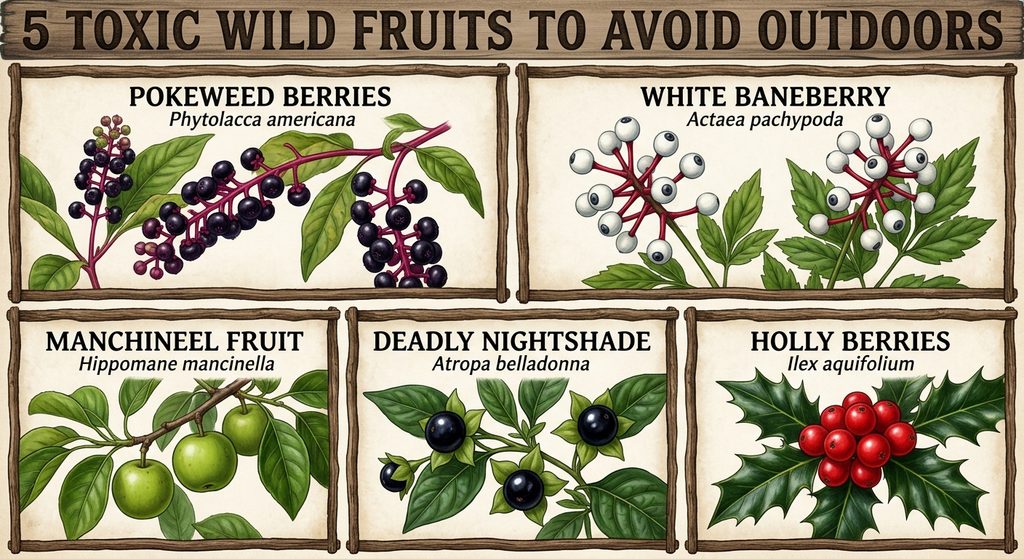
When foraging or hiking outdoors, the golden rule is simple: NEVER EAT A WILD FRUIT UNLESS YOU ARE 100% CERTAIN OF ITS IDENTIFICATION.
Here are 5 highly toxic fruits and berries to strictly avoid in the wild:
1. MANCHINEEL FRUIT (“Beach Apple”)
- Appearance: Looks like a small green apple or lime, growing on trees near coastal areas in tropical climates (Florida, the Caribbean, Central America).
- Why it’s dangerous: Known as the world’s most dangerous tree, the small apple-like fruit causes severe blistering, internal burns, and extreme digestive failure if consumed. Even sap dripping from the leaves during rain can burn skin.
2. POKEWEED BERRIES (Phytolacca americana)
- Appearance: Deep purple-black shiny berries hanging in long grape-like clusters on distinct bright magenta or reddish stems.
- Why it’s dangerous: Common across North America. The raw berries, seeds, and mature plant contain phytolaccatoxin, causing severe vomiting, bloody diarrhea, convulsions, and respiratory distress.
3. DEADLY NIGHTSHADE (Atropa belladonna)
- Appearance: Shiny, dark purple-to-black berries borne individually on stems, surrounded by a distinct star-shaped green leaf structure (calyx).
- Why it’s dangerous: Contains lethal tropane alkaloids (atropine and scopolamine). Ingesting even a small handful of berries can cause paralysis, hallucinations, rapid heart rate, and fatal central nervous system failure.
4. WHITE BANEBERRY (“Doll’s Eyes”)
- Appearance: Unmistakable white berries with a dark central spot, borne on thick red stalks, resembling tiny eyeballs.
- Why it’s dangerous: Contains cardiogenic toxins that immediately paralyze heart muscle tissue, leading to cardiac arrest if ingested.
5. HOLLY BERRIES (Ilex species)
- Appearance: Bright red, glossy berries growing densely along spiky-leaved evergreen branches.
- Why it’s dangerous: While commonly associated with winter decorations, these berries contain saponins and ilicin. Ingesting them leads to severe gastrointestinal distress, vomiting, dehydration, and drowsiness.