


When the grid goes dark or the supply chain snaps, you can’t eat a tactical flashlight. High-tech survival gear and expensive freeze-dried meals have their place, but true resilience comes down to basic, high-density nutrition that sustained entire generations through total economic collapse. During the Great Depression, families didn’t rely on freeze-dryers or fancy tech—they relied on cheap bulk staples, high-calorie fats, and proven preservation methods.
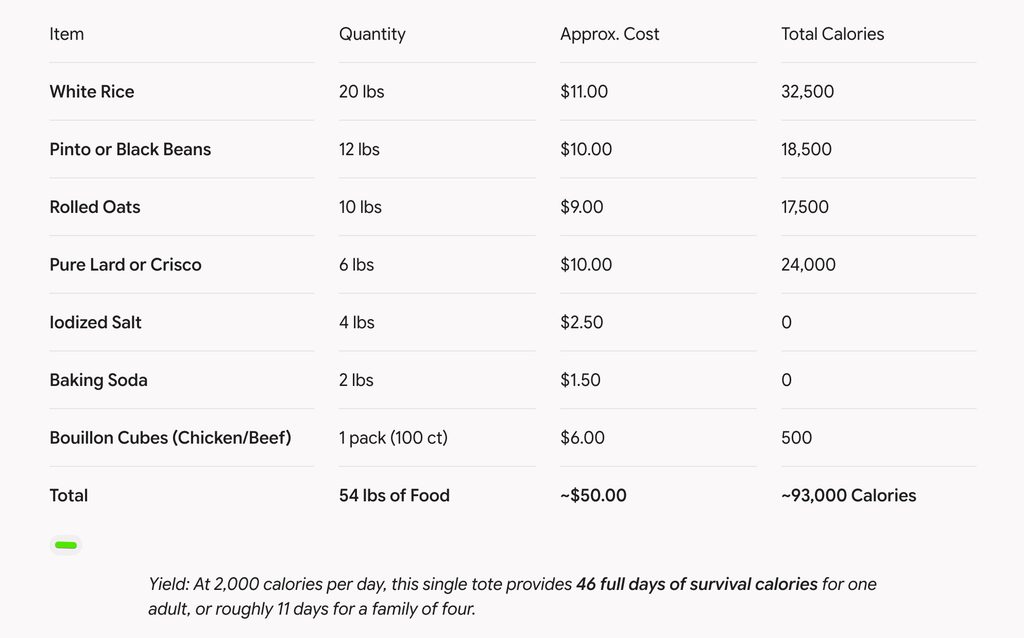
Here is how to assemble a complete, high-calorie emergency meal plan for $50 using off-the-shelf staples that pack down into a single 18-gallon plastic tote.
The $50 Pantry Build
Prices reflect standard bulk grocery store options (or local discount supermarkets):

Key Historical Angles & Recipes
1. The Calorie Engine: Lard & Rendered Fats
- The Concept: During systemic collapses, lean protein is easy to find compared to dense calories. Fat is fuel. A single bucket of lard provides 24,000 shelf-stable calories that don’t require refrigeration if kept sealed and cool.
- Depression Staple: Lard Biscuits & Skillet Bread. Mixing flour/oats, water, salt, baking soda, and lard produces dense, filling bread that keeps workers full all day.
2. The Complete Protein: Rice, Beans, and Salt-Curing
- The Concept: Rice and beans combined yield a complete amino acid profile. Salt isn’t just for flavor; it’s a critical electrolyte and the oldest preservation tool on earth.
- Depression Staple: Hoover Stew & Salted Bean Porridge. Boiling beans with salt and bouillon creates a nutrient-rich broth. Adding rice stretches the dish and ensures zero wasted calories.
3. Fuel for Cold Weather: Oatmeal & Lard Porridge
- The Concept: Oats store extremely well and digest slowly, providing sustained energy without spiking blood sugar.
- Depression Staple: Savory Oatmeal. Instead of sugar, oats were historically cooked with bouillon, salt, and a spoonful of lard to create a hot, calorie-dense breakfast broth.
How to Pack the Tote for Maximum Shelf Life
- Moisture Control: Line the 18-gallon tote with a heavy-duty contractor bag.
- Repackaging: Divide the rice, beans, and oats into 1-gallon Mylar bags with 300cc oxygen absorbers to push shelf life to 20+ years.
- Pest Barrier: The hard outer plastic tote protects against rodents and light, while keeping all 50+ pounds of food modular and ready to load into a vehicle in under 30 seconds.