


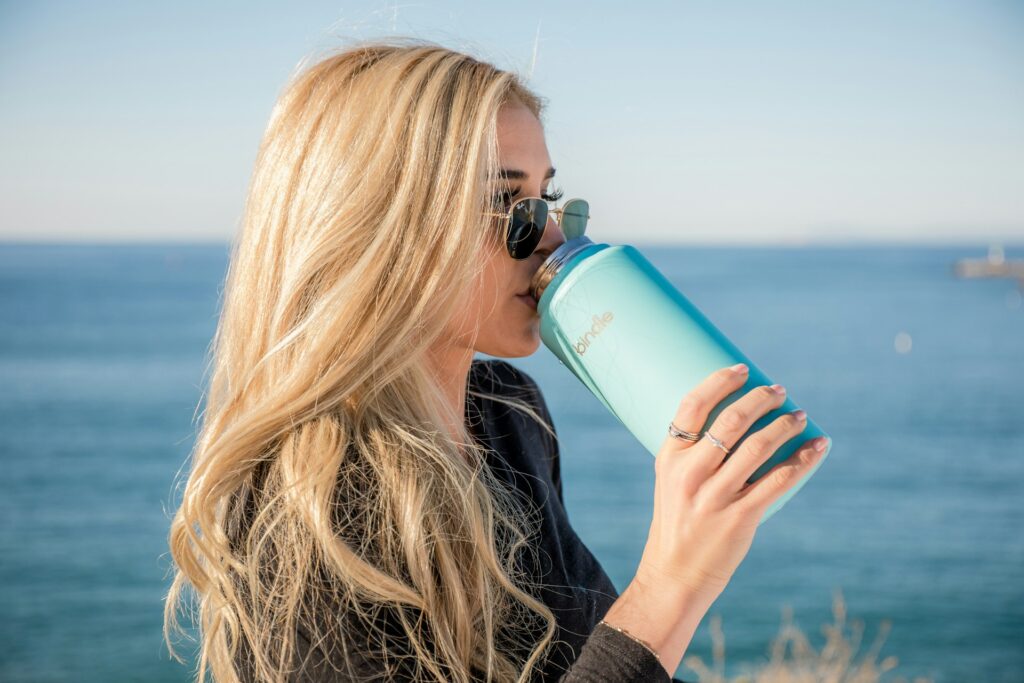
The sun isn’t just hot; it’s a persistent drain on your body’s vital resources. When temperatures climb, survival isn’t about toughing it out—it is a math problem where your life depends on balancing water intake against sweat loss. Understanding how your body handles extreme heat, and how to properly manage your hydration, can mean the difference between a minor inconvenience and a medical emergency.
The Body’s Thermostat: How We Lose Water
To keep your core temperature near its safe $98.6^\circ\text{F}$ ($37^\circ\text{C}$) baseline, your brain activates its most efficient cooling mechanism: evaporation. Sweat glands pump water onto your skin, and as the surrounding air evaporates that moisture, it carries heat away with it.
However, this built-in air conditioner comes at a massive cost. In extreme heat, an active adult can easily lose 1 to 2 liters of sweat per hour. If you don’t replace that fluid, your blood volume drops, making your heart pump harder to deliver oxygen. This is the starting point for heat exhaustion, which can quickly spiral into heat stroke—a life-threatening failure of the body’s cooling system.
The Hydration Strategy: Beyond Just Drinking
Survival in the heat requires a proactive approach to fluid replacement. By the time you feel thirsty, you are already roughly 1% to 2% dehydrated, a level that already impairs your cognitive function and physical endurance.
- Pace Your Intake: Your body can only absorb about 1 liter (roughly 32 ounces) of water per hour. Chugging a gallon of water all at once won’t fix severe dehydration; it will simply stress your kidneys and flush out critical nutrients. Drink small amounts every 15 to 20 minutes.
- Don’t Forget Electrolytes: Sweat isn’t just water; it is a mixture of water and essential minerals, primarily sodium and potassium. Drinking massive amounts of plain water without replacing these minerals can lead to hyponatremia—a dangerous dilution of sodium levels in your blood that causes confusion, nausea, and seizures. If you are sweating heavily for more than an hour, mix in a sports drink or an electrolyte packet.
- Monitor Your Output: The easiest way to check your hydration status is to look at your urine. Clear or light yellow (like lemonade) means you are doing well. Dark yellow or amber (like apple juice) is a clear warning sign that you are dangerously dehydrated.
Environmental Multipliers: Humidity and Shade
Temperature is only one piece of the survival puzzle. Relative humidity plays a massive role in how fast you dehydrate. When the air is already saturated with moisture, your sweat cannot evaporate into the air. It simply rolls off your skin, wasting your body’s water supplies without providing any cooling effect. On humid days, your core temperature can spike much faster, making hydration even more critical.
Additionally, direct sunlight adds radiant heat to your body, increasing your sweat rate by up to 25% compared to sitting in the shade. If you find yourself stranded or working in high heat, finding or creating shade is just as vital as finding water.
Ultimately, surviving extreme heat comes down to respecting the environment and listening to your body. Keep a constant supply of water nearby, protect yourself from direct sunlight, and remember that when it comes to hydration, consistency beats volume every single time.