<!-- WP QUADS Content Ad Plugin v. 3.0.5.1 -->
<div class="quads-location quads-ad1" id="quads-ad1" style="float:none;margin:10px;">

</div>

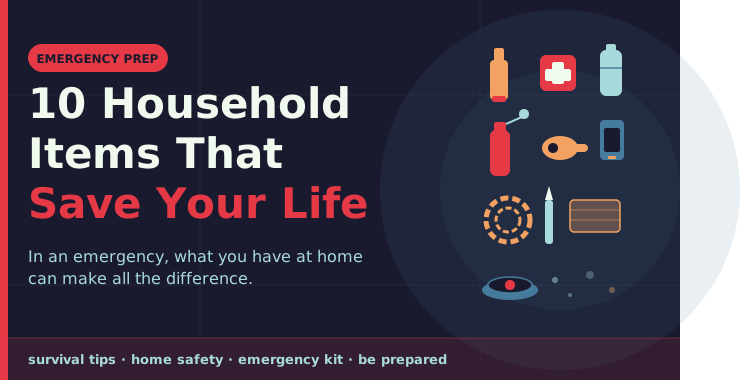
<p class="wp-block-wd-paragraph wd-80b26805">Here are 10 household items that can save your life in an emergency:</p>


<p class="wp-block-wd-paragraph wd-412d986e"><strong>1. Flashlight (with extra batteries)</strong> Power outages during emergencies leave you vulnerable. A flashlight helps you navigate safely, signal for help, and avoid hazards in the dark.</p>


<p class="wp-block-wd-paragraph wd-432a7fa6"><strong>2. First Aid Kit</strong> Cuts, burns, and injuries are common in emergencies. A well-stocked kit with bandages, antiseptic, gauze, and pain relievers can prevent infections and manage wounds until help arrives.</p>


<p class="wp-block-wd-paragraph wd-d87d64e3"><strong>3. Fire Extinguisher</strong> A small kitchen or garage fire can become catastrophic in minutes. A multipurpose (ABC-rated) extinguisher can stop a fire before it spreads.</p>


<p class="wp-block-wd-paragraph wd-119fb6b5"><strong>4. Smoke &; Carbon Monoxide Detector</strong> These silent killers claim thousands of lives yearly. Working detectors give you the critical early warning you need to escape.</p>


<p class="wp-block-wd-paragraph wd-216b3719"><strong>5. Bottled Water / Water Storage</strong> In disasters (earthquakes, floods, contamination), tap water may be unsafe or unavailable. The rule of thumb is 1 gallon per person per day for at least 3 days.</p>


<p class="wp-block-wd-paragraph wd-fe434692"><strong>6. Knife or Multi-Tool</strong> A sturdy knife or multi-tool can cut seatbelts, break windows, prepare food, build shelter, and perform dozens of emergency tasks.</p>
<!-- WP QUADS Content Ad Plugin v. 3.0.5.1 -->
<div class="quads-location quads-ad2" id="quads-ad2" style="float:none;margin:10px;">

</div>


<p class="wp-block-wd-paragraph wd-31712f5e"><strong>7. Rope or Paracord</strong> Useful for securing debris, creating a makeshift tourniquet, lowering yourself from a window, building shelter, or tying a splint.</p>


<p class="wp-block-wd-paragraph wd-ad9c01ef"><strong>8. Whistle</strong> If you&#8217;re trapped or lost, your voice gives out quickly. A whistle carries much farther and requires far less energy — rescuers are trained to listen for it.</p>


<p class="wp-block-wd-paragraph wd-a38120d7"><strong>9. Blankets / Mylar Emergency Blankets</strong> Hypothermia can set in even in mild temperatures, especially if you&#8217;re wet or injured. Blankets retain body heat and can also be used for signaling (the reflective surface is visible from the air).</p>


<p class="wp-block-wd-paragraph wd-739679a8"><strong>10. Portable Phone Charger (Power Bank)</strong> Your phone is your lifeline — for calling 911, accessing emergency alerts, GPS navigation, and contacting family. A charged power bank keeps it alive when the power grid is down.</p>


<div class="wp-block-wd-divider wd-style-line wd-24d63e5d"></div>


<p class="wp-block-wd-paragraph wd-9e0100e5"><strong>Bonus tip:</strong> Keep these items together in a dedicated <strong>emergency bag or kit</strong> so you&#8217;re not scrambling to find them when seconds count. Regularly check batteries, expiration dates, and charge levels.
<!-- WP QUADS Content Ad Plugin v. 3.0.5.1 -->
<div class="quads-location quads-ad6" id="quads-ad6" style="float:none;margin:0px;">

</div>


10 household items that can save your life in an emergency